Showing posts with label iron fist. Show all posts

Sunday, September 9, 2018

Creator credits for Iron Fist (Season 2)

Hey, that was an improvement... is the very least you can say.

Roy Thomas: creator of the title "The Fury of Iron Fist" (Marvel Premiere #15, 1974); of the title "Heart of the Dragon" (Marvel Premiere #16, 1974); co-creator of Turk Barrett, a gangster (Daredevil #69, 1970); of Luke Cage, a Harlem-based hero with unbreakable skin (Hero for Hire #1, 1972); of Iron Fist, alias Daniel Rand, orphaned at the age of ten and raised in the city of K'un-Lun, where he trained in the martial arts to become their greatest warrior, passing every test and trial before him until gaining the power to channel his chi into his fist, making it superhumanly powerful; Iron Fist called a "living weapon"; Wendell Rand and Heather Rand, Daniel's parents who perished nearby K'un-Lun; Harold Meachum, Wendell's business partner who betrayed him and had Wendell and Heather killed; K'un-Lun, a hidden city found in the Himalayas which exists within another dimension and only connects to Earth at intervals spaced years apart; of the Iron Fist costume with open chest, green garments with yellow mask; of Yu-Ti, the ruler of K'un-Lun who oversaw Danny Rand's trials (Marvel Premiere #15, 1974); of Daniel Rand fighting the dragon Shou-Lao the Undying, an immortal dragon, and received a dragon-shaped brand on his chest from the dragon along with the power of the Iron Fist; Lei Kung the Thunderer, Daniel's K'un-Lun mentor in the martial arts; of the Thunderer's insignia (Marvel Premiere #16, 1974)

Chris Claremont: creator of the title "A Duel of Iron" (Iron Fist #1, 1975); of the title "The City's Not for Burning" (Iron Fist #3, 1976); of the title "The Dragon Dies at Dawn" (Iron Fist #9, 1976); of the title "Target: Iron Fist" (Iron Fist #13, 1977); of the title "Morning of the Mindstorm" (Marvel Premiere #25, 1975); co-creator of Colleen Wing and Misty Knight as allies (Deadly Hands of Kung Fu #32, 1977); of Davos, a resident of K'un-Lun; of the Steel Serpent brand; of Misty Knight's background as a police officer (Iron Fist #1, 1975); of Daniel Rand being disliked in K'un-Lun as an outsider; of Daniel's K'un-Lun surname 'Rand-K'ai' (Iron Fist #2, 1975); of Davos working with Joy Meachum; of Misty Knight's bionic right arm (Iron Fist #3, 1976); of Colleen Wing following the path of bushido and wielding a katana (Iron Fist #7, 1976); of the Golden Tigers, a Chinese-American street gang which engages in gang wars and battle both Iron Fist and Davos; of Chen Wu, one of the Golden Tigers (Iron Fist #8, 1976); of Davos siphoning the Iron Fist from Danny Rand into himself (Iron Fist #14, 1977); of Davos as Lei Kung's son; of Davos nearly killing Iron Fist by draining his chi (Marvel Team-Up #63, 1977); of Davos training alongside Daniel Rand to become the Iron Fist; of the Iron Fist as a title which many have held over the centuries (Marvel Team-Up #64, 1977)

John Byrne: co-creator of Davos, a resident of K'un-Lun; of the Steel Serpent brand; of Misty Knight's background as a police officer (Iron Fist #1, 1975); of Daniel Rand being disliked in K'un-Lun as an outsider; of Daniel's K'un-Lun surname 'Rand-K'ai' (Iron Fist #2, 1975); of Davos working with Joy Meachum; of Misty Knight's bionic right arm (Iron Fist #3, 1976); of Colleen Wing following the path of bushido and wielding a katana (Iron Fist #7, 1976); of the Golden Tigers, a Chinese-American street gang which engages in gang wars and battle both Iron Fist and Davos; of Chen Wu, one of the Golden Tigers (Iron Fist #8, 1976); of Davos siphoning the Iron Fist from Danny Rand into himself (Iron Fist #14, 1977); of Davos as Lei Kung's son; of Davos nearly killing Iron Fist by draining his chi (Marvel Team-Up #63, 1977); of Davos training alongside Daniel Rand to become the Iron Fist; of the Iron Fist as a title which many have held over the centuries (Marvel Team-Up #64, 1977)

Gil Kane: co-creator of Iron Fist, alias Daniel Rand, orphaned at the age of ten and raised in the city of K'un-Lun, where he trained in the martial arts to become their greatest warrior, passing every test and trial before him until gaining the power to channel his chi into his fist, making it superhumanly powerful; Iron Fist called a "living weapon"; Wendell Rand and Heather Rand, Daniel's parents who perished nearby K'un-Lun; Harold Meachum, Wendell's business partner who betrayed him and had Wendell and Heather killed; K'un-Lun, a hidden city found in the Himalayas which exists within another dimension and only connects to Earth at intervals spaced years apart; of the Iron Fist costume with open chest, green garments with yellow mask; of Yu-Ti, the ruler of K'un-Lun who oversaw Danny Rand's trials (Marvel Premiere #15, 1974)

Ed Brubaker: co-creator of Iron Fist taking the place of Daredevil (Daredevil #87, 2006); of Orson Randall, Danny Rand's predecessor as Iron Fist; of the Crane Sisters, allies of Davos (Immortal Iron Fist #1, 2007); of the Iron Fist's chi being channeled through different weapons; of Orson Randall's trenchcoat and chi-firing pistols; of Wu Ao-Shi, a female Chinese Iron Fist called 'The Pirate Queen of Pinghai Bay (Immortal Iron Fist #2, 2007); of the Iron Fist called an Immortal Weapon; of Wu Ao-Shi falling in love with a fisherman (Immortal Iron Fist #7, 2007)

Larry Hama: co-creator of Daniel Rand fighting the dragon Shou-Lao the Undying, an immortal dragon, and received a dragon-shaped brand on his chest from the dragon along with the power of the Iron Fist; Lei Kung the Thunderer, Daniel's K'un-Lun mentor in the martial arts; of the Thunderer's insignia (Marvel Premiere #16, 1974); of Joy Meachum, Harold's daughter (Marvel Premiere #18, 1974); of Ward Meachum, a relative of Harold and Joy; of Colleen Wing, a Japanese woman, ally and sometimes love interest of Iron Fist (Marvel Premiere #19, 1974)

Matt Fraction: co-creator of Orson Randall, Danny Rand's predecessor as Iron Fist; of the Crane Sisters, allies of Davos (Immortal Iron Fist #1, 2007); of the Iron Fist's chi being channeled through different weapons; of Orson Randall's trenchcoat and chi-firing pistols; of Wu Ao-Shi, a female Chinese Iron Fist called 'The Pirate Queen of Pinghai Bay (Immortal Iron Fist #2, 2007); of the Iron Fist called an Immortal Weapon; of Wu Ao-Shi falling in love with a fisherman (Immortal Iron Fist #7, 2007)

Doug Moench: creator of the title "Citadel on the Edge of Vengeance" (Marvel Premiere #17, 1974); co-creator of Joy Meachum, Harold's daughter (Marvel Premiere #18, 1974); of Ward Meachum, a relative of Harold and Joy; of Colleen Wing, a Japanese woman, ally and sometimes love interest of Iron Fist (Marvel Premiere #19, 1974)

Len Wein: co-creator of Daniel Rand fighting the dragon Shou-Lao the Undying, an immortal dragon, and received a dragon-shaped brand on his chest from the dragon along with the power of the Iron Fist; Lei Kung the Thunderer, Daniel's K'un-Lun mentor in the martial arts; of the Thunderer's insignia (Marvel Premiere #16, 1974)

David Aja: co-creator of Orson Randall, Danny Rand's predecessor as Iron Fist; of the Crane Sisters, allies of Davos (Immortal Iron Fist #1, 2007); of the Iron Fist's chi being channeled through different weapons; of Orson Randall's trenchcoat and chi-firing pistols (Immortal Iron Fist #2, 2007)

John Romita Jr.: co-creator of Typhoid Mary, Mary Walker, a woman with multiple personalities who wields a machete; Typhoid Mary sent to monitor a super hero, her 'Mary' persona develops a crush on him (Daredevil #254, 1988)

Ann Nocenti: co-creator of Typhoid Mary, Mary Walker, a woman with multiple personalities who wields a machete; Typhoid Mary sent to monitor a super hero, her 'Mary' persona develops a crush on him (Daredevil #254, 1988)

Travel Foreman: co-creator of Wu Ao-Shi, a female Chinese Iron Fist called 'The Pirate Queen of Pinghai Bay (Immortal Iron Fist #2, 2007); of Wu Ao-Shi falling in love with a fisherman (Immortal Iron Fist #7, 2007)

Jason Henderson: co-creator of Colleen Wing as a member of the Hand (Shadowland: Daughters of the Shadow #1, 2010); of Colleen leaving the Hand (Shadowland: Daughters of the Shadow #3, 2010)

Ivan Rodriguez: co-creator of Colleen Wing as a member of the Hand (Shadowland: Daughters of the Shadow #1, 2010); of Colleen leaving the Hand (Shadowland: Daughters of the Shadow #3, 2010)

Tony Isabella: co-creator of Misty Knight, an African-American detective who encounters Iron Fist (Marvel Premiere #21, 1975)

Arvell Jones: co-creator of Misty Knight, an African-American detective who encounters Iron Fist (Marvel Premiere #21, 1975)

Jay Faerber: co-creator of Iron Fist battling the Hand; of the Hand seeking to control Iron Fist's power (New Warriors #7, 2000)

Jamal Igle: co-creator of Iron Fist battling the Hand; of the Hand seeking to control Iron Fist's power (New Warriors #7, 2000)

Charles Soule: co-creator of Sam Chung, a Chinese-American man (All-New All-Different Marvel Point One #1, 2015)

Ron Garney: co-creator of Sam Chung, a Chinese-American man (All-New All-Different Marvel Point One #1, 2015)

Archie Goodwin: co-creator of Luke Cage, a Harlem-based hero with unbreakable skin (Hero for Hire #1, 1972)

George Tuska: co-creator of Luke Cage, a Harlem-based hero with unbreakable skin (Hero for Hire #1, 1972)

John Romita: co-creator of Luke Cage, a Harlem-based hero with unbreakable skin (Hero for Hire #1, 1972)

Bill Everett: co-creator of Matt Murdock, alias Daredevil, a costumed crimefighter (Daredevil #1, 1964)

Frank Miller: creator of the Hand, a clan of evil ninjas who battle Daredevil (Daredevil #174, 1981)

Stan Lee: co-creator of Matt Murdock, alias Daredevil, a costumed crimefighter (Daredevil #1, 1964)

Marshall Rogers: co-creator of Colleen Wing and Misty Knight as allies (Deadly Hands of Kung Fu #32, 1977)

Travel Foreman: co-creator of the Iron Fist called an Immortal Weapon (Immortal Iron Fist #7, 2007)

Brian Michael Bendis: co-creator of Typhoid Mary wearing black leather (Daredevil #46, 2003)

Marco Checchetto: co-creator of Bakuto, a member of the Hand (Daredevil #505, 2010)

Kurt Busiek: creator of the title "This Deadly Secret" (Power Man and Iron Fist #99, 1983)

Antony Johnston: co-creator of Bakuto, a member of the Hand (Daredevil #505, 2010)

Michael Lark: co-creator of Iron Fist taking the place of Daredevil (Daredevil #87, 2006)

Andy Diggle: co-creator of Bakuto, a member of the Hand (Daredevil #505, 2010)

Jo Duffy: creator of the title "War Without End" (Power Man and Iron Fist #83, 1982)

Alex Maleev: co-creator of Typhoid Mary wearing black leather (Daredevil #46, 2003)

Gene Colan: co-creator of Turk Barrett, a gangster (Daredevil #69, 1970)

Sunday, March 19, 2017

Iron Fist (season 1) creator credits

...Wow. That was a waste.

Anyway, yet another Marvel Netflix series has dropped so here's whose ideas contributed to Iron Fist. Don't blame them.

My other Marvel creator credit lists are found here.

Roy Thomas: co-creator of Luke Cage, a hero with unbreakable skin (Hero for Hire #1, 1972); Iron Fist, alias Daniel Rand, orphaned at the age of ten and raised in the city of K'un-Lun, where he trained in the martial arts to become their greatest warrior, passing every test and trial before him until gaining the power to channel his chi into his fist, making it superhumanly powerful; Iron Fist called a "living weapon"; Wendell Rand and Heather Rand, Daniel's parents who perished nearby K'un-Lun; Harold Meachum, Wendell's business partner who betrayed him and had Wendell and Heather killed; K'un-Lun, a hidden city found in the Himalayas which exists within another dimension and only connects to Earth at intervals spaced years apart (Marvel Premiere #15, 1974); of Daniel Rand fighting the dragon Shou-Lao the Undying, an immortal dragon, and received a dragon-shaped brand on his chest from the dragon along with the power of the Iron Fist; Lei Kung the Thunderer, Daniel's K'un-Lun mentor in the martial arts; of the Thunderer's insignia; of Daniel leaving K'un-Lun to return to New York and seek his parents' killer, Harold Meachum; of Scythe, an assassin who battles Iron Fist (Marvel Premiere #16, 1974)

Chris Claremont: co-creator of Colleen Wing as a Daughter of the Dragon (Deadly Hands of Kung Fu #32, 1977); of Davos, a resident of K'un-Lun; of the Steel Serpent brand (Iron Fist #1, 1975); of Daniel Rand being disliked in K'un-Lun as an outsider (Iron Fist #2, 1975); of Davos working with Joy Meachum (Iron Fist #3, 1976); of Iron Fist's power to heal injuries using his chi; Iron Fist using meditation to recover his strength (Iron Fist #4, 1976); of Jeryn Hogarth serving Wendell Rand in the past (Iron Fist #6, 1976); of Colleen Wing following the path of bushido and wielding a katana (Iron Fist #7, 1976); of Jeryn Hogarth, a lawyer who works for Daniel Rand (Marvel Premiere #24, 1975); of Davos as Lei Kung's son (Marvel Team-Up #63, 1977); of Davos training alongside Daniel Rand to become the Iron Fist; of the Iron Fist as a title which many have held over the centuries (Marvel Team-Up #64, 1977)

Larry Hama: co-creator of Daniel Rand fighting the dragon Shou-Lao the Undying, an immortal dragon, and received a dragon-shaped brand on his chest from the dragon along with the power of the Iron Fist; Lei Kung the Thunderer, Daniel's K'un-Lun mentor in the martial arts; of the Thunderer's insignia; of Daniel leaving K'un-Lun to return to New York and seek his parents' killer, Harold Meachum; of Scythe, an assassin who battles Iron Fist (Marvel Premiere #16, 1974); of Harold Meachum suffering from ill health after killing Iron Fist's parents; of Joy Meachum, Harold's daughter; of Iron Fist battling ninjas (Marvel Premiere #18, 1974); of Ward Meachum, a relative of Harold and Joy who bears a grudge against Iron Fist and hires men to attack him; of Colleen Wing, a Japanese woman, ally and sometimes love interest of Iron Fist (Marvel Premiere #19, 1974)

John Byrne: co-creator of Davos, a resident of K'un-Lun; of the Steel Serpent brand (Iron Fist #1, 1975); of Daniel Rand being disliked in K'un-Lun as an outsider (Iron Fist #2, 1975); of Davos working with Joy Meachum (Iron Fist #3, 1976); of Iron Fist's power to heal injuries using his chi; Iron Fist using meditation to recover his strength (Iron Fist #4, 1976); of Jeryn Hogarth serving Wendell Rand in the past (Iron Fist #6, 1976); of Colleen Wing following the path of bushido and wielding a katana (Iron Fist #7, 1976); of Davos as Lei Kung's son (Marvel Team-Up #63, 1977); of Davos training alongside Daniel Rand to become the Iron Fist; of the Iron Fist as a title which many have held over the centuries (Marvel Team-Up #64, 1977)

Gil Kane: co-creator of Iron Fist, alias Daniel Rand, orphaned at the age of ten and raised in the city of K'un-Lun, where he trained in the martial arts to become their greatest warrior, passing every test and trial before him until gaining the power to channel his chi into his fist, making it superhumanly powerful; Iron Fist called a "living weapon"; Wendell Rand and Heather Rand, Daniel's parents who perished nearby K'un-Lun; Harold Meachum, Wendell's business partner who betrayed him and had Wendell and Heather killed; K'un-Lun, a hidden city found in the Himalayas which exists within another dimension and only connects to Earth at intervals spaced years apart (Marvel Premiere #15, 1974)

Matt Fraction: co-creator of Crane Mother, a mystical entity connected to K'un-Lun (Immortal Iron Fist #4, 2007); of K'un-Lun as one of the capital cities of Heaven (Immortal Iron Fist #5, 2007); of the Iron Fist called an Immortal Weapon (Immortal Iron Fist #7, 2007); of Iron Fist being sent into a tournament against various martial artists, including The Bride of Nine Spiders (Immortal Iron Fist #8, 2007); of Daniel Rand teaching at a dojo (Immortal Iron Fist #16, 2008)

Len Wein: co-creator of Daniel Rand fighting the dragon Shou-Lao the Undying, an immortal dragon, and received a dragon-shaped brand on his chest from the dragon along with the power of the Iron Fist; Lei Kung the Thunderer, Daniel's K'un-Lun mentor in the martial arts; of the Thunderer's insignia; of Daniel leaving K'un-Lun to return to New York and seek his parents' killer, Harold Meachum; of Scythe, an assassin who battles Iron Fist (Marvel Premiere #16, 1974)

Doug Moench: co-creator of Harold Meachum suffering from ill health after killing Iron Fist's parents; of Joy Meachum, Harold's daughter; of Iron Fist battling ninjas (Marvel Premiere #18, 1974); of Ward Meachum, a relative of Harold and Joy who bears a grudge against Iron Fist and hires men to attack him; of Colleen Wing, a Japanese woman, ally and sometimes love interest of Iron Fist (Marvel Premiere #19, 1974)

Ed Brubaker: co-creator of Crane Mother, a mystical entity connected to K'un-Lun (Immortal Iron Fist #4, 2007); of K'un-Lun as one of the capital cities of Heaven (Immortal Iron Fist #5, 2007); of the Iron Fist called an Immortal Weapon (Immortal Iron Fist #7, 2007); of Iron Fist being sent into a tournament against various martial artists, including The Bride of Nine Spiders (Immortal Iron Fist #8, 2007)

David Aja: co-creator of Crane Mother, a mystical entity connected to K'un-Lun (Immortal Iron Fist #4, 2007); of K'un-Lun as one of the capital cities of Heaven (Immortal Iron Fist #5, 2007); of Iron Fist being sent into a tournament against various martial artists, including The Bride of Nine Spiders (Immortal Iron Fist #8, 2007); of Daniel Rand teaching at a dojo (Immortal Iron Fist #16, 2008)

Stan Lee: co-creator of Daredevil, a costumed crimefighter; of Karen Page (Daredevil #1, 1964); of the Hulk, a monstrous super hero (Incredible Hulk #1, 1962); of the Hulk having green skin (Incredible Hulk #2, 1962); of Stark Industries, Tony Stark's technology company (Tales of Suspense #45, 1963)

Bill Everett: co-creator of Daredevil, a costumed crimefighter (Daredevil #1, 1964); creator of the white male orphan raised in a Himalayan city and trained to become a great warrior through many trials, then returning to the world outside to use his mystical gifts (Amazing-Man Comics #5, 1939)

Sal Buscema: co-creator of Dr. Paul Edmonds, a psychiatrist who assesses the mental status of a super hero (Avengers #227, 1983); of Roxxon Energy, a ruthless criminal corporation (Captain America #180, 1974); of the exclamation "Sweet Christmas" as an epithet (Defenders #24, 1975)

Frank Miller: creator of the Hand, a clan of evil ninjas who battle Daredevil (Daredevil #174, 1981); of the Hand's ability to mystically resurrect fallen warriors (Daredevil #187, 1982)

Travel Foreman: co-creator of the Iron Fist called an Immortal Weapon (Immortal Iron Fist #7, 2007); of Zhou Cheng, a martial artist who fights Iron Fist (Immortal Iron Fist #17, 2009)

Jason Henderson: co-creator of Colleen Wing as a member of the Hand (Shadowland: Daughters of the Shadow #1, 2010); of Colleen leaving the Hand (Shadowland: Daughters of the Shadow #3, 2010)

Ivan Rodriguez: co-creator of Colleen Wing as a member of the Hand (Shadowland: Daughters of the Shadow #1, 2010); of Colleen leaving the Hand (Shadowland: Daughters of the Shadow #3, 2010)

Brian Michael Bendis: co-creator of Jessica Jones, an alcoholic private detective (Alias #1, 2001); the Night Nurse, a medic who treats superhumans (Daredevil #58, 2004)

Archie Goodwin: co-creator of Luke Cage, a hero with unbreakable skin (Hero for Hire #1, 1972); Claire Temple, a physician who knows Luke Cage (Hero for Hire #2, 1972)

George Tuska: co-creator of Luke Cage, a hero with unbreakable skin (Hero for Hire #1, 1972); Claire Temple, a physician who knows Luke Cage (Hero for Hire #2, 1972)

Jack Kirby: co-creator of the Hulk, a monstrous super hero (Incredible Hulk #1, 1962); of the Hulk having green skin (Incredible Hulk #2, 1962)

Roger Stern: co-creator of Dr. Paul Edmonds, a psychiatrist who assesses the mental status of a super hero (Avengers #227, 1983)

Dan Brereton: co-creator of the Singing Spider, an instrument of death used by the Bride of Nine Spiders (Immortal Weapons #2, 2009)

Cullen Bunn: co-creator of the Singing Spider, an instrument of death used by the Bride of Nine Spiders (Immortal Weapons #2, 2009)

Jay Faerber: co-creator of Iron Fist battling the Hand; of the Hand seeking to control Iron Fist's power (New Warriors #7, 2000)

Jamal Igle: co-creator of Iron Fist battling the Hand; of the Hand seeking to control Iron Fist's power (New Warriors #7, 2000)

Duane Swierczynski: co-creator of Zhou Cheng, a martial artist who fights Iron Fist (Immortal Iron Fist #17, 2009)

Russ Heath: co-creator of Zhou Cheng, a martial artist who fights Iron Fist (Immortal Iron Fist #17, 2009)

Pat Broderick: co-creator of Jeryn Hogarth, a lawyer who works for Daniel Rand (Marvel Premiere #24, 1975)

Steve Englehart: co-creator of Roxxon Energy, a ruthless criminal corporation (Captain America #180, 1974)

Robert Bernstein: co-creator of Stark Industries, Tony Stark's technology company (Tales of Suspense #45, 1963)

Marshall Rogers: co-creator of Colleen Wing as a Daughter of the Dragon (Deadly Hands of Kung Fu #32, 1977)

Jimmy Palmiotti: co-creator of Colleen Wing wearing a white jumpsuit (Daughters of the Dragon #1, 2006)

Alex Maleev: co-creator of the Night Nurse, a medic who treats superhumans (Daredevil #58, 2004)

Don Heck: co-creator of Stark Industries, Tony Stark's technology company (Tales of Suspense #45, 1963)

Justin Gray: co-creator of Colleen Wing wearing a white jumpsuit (Daughters of the Dragon #1, 2006)

Khari Evans: co-creator of Colleen Wing wearing a white jumpsuit (Daughters of the Dragon #1, 2006)

Michael Gaydos: co-creator of Jessica Jones, an alcoholic private detective (Alias #1, 2001)

John Romita: co-creator of Luke Cage, a hero with unbreakable skin (Hero for Hire #1, 1972)

Steve Gerber: co-creator of the exclamation "Sweet Christmas" as an epithet (Defenders #24, 1975)

Marco Checchetto: co-creator of Bakuto, a member of the Hand (Daredevil #505, 2010)

Antony Johnston: co-creator of Bakuto, a member of the Hand (Daredevil #505, 2010)

Andy Diggle: co-creator of Bakuto, a member of the Hand (Daredevil #505, 2010)

Win Mortimer: co-creator of Night Nurse (Night Nurse #1, 1972)

Jean Thomas: co-creator of Night Nurse (Night Nurse #1, 1972)

Monday, March 13, 2017

Iron Fist, Shangri-La, Amazing-Man, Kung Fu and the Mighty Whitey

With the debut of Netflix's Iron Fist television show nearly upon us, many people in and about the internet have been commenting on matters of race in the Iron Fist saga - that is, that the hero is, in the comics and on the show, a white guy who gained his powers from an Asian culture.

So, let's begin our history lesson - but first, we'll have to step way back and do some pop culture history.

#1: The Fabled Lost City

There is a tradition in fiction of lost civilizations, places which are kept out of reach of modern man. These places may be hidden in a distant jungle, in an underground cavern, atop a high mountain, on the bottom of the ocean or the surface of the moon. Iron Fist's homeland, K'un-Lun, is such a place; it is a city which lies within an alternate dimension and can only be accessed through a portal found in the Himalayan mountains. And so, before we can start talking about K'un-Lun as an appropriation of Asian culture, we have to acknowledge it's actually an appropriation of western culture which could be said to have been appropriated from Asian culture. Er... or something like that.

British author James Hilton wrote Lost Horizon in 1933. It tells of a fantastic city called Shangri-La which is virtually hidden in the Himalayas and unknown to the world at large. Shangri-La is a paradise of knowledge and is used in the novel (and 1937 film adaptation) as an escape from the punishing realities of contemporary times - the idea that even if western civilization perished in World War II, humanity's knowledge would be maintained in the yet-peaceful land of Shangri-La. The only truly fantastical element in the novel is that people in Shangri-La have extraordinarily-long lifespans but outside the city's borders age rapidly. And so, K'un-Lun is likewise a remote Himalayan retreat which, nevertheless, boasts a surprising understanding of the western world - Lost Horizon was an extremely popular book in its day and was remade as a (terrible) film in 1973, a year before Iron Fist's debut. Yet Hilton had himself based Shangri-La upon a pre-existing city in Asian lore: Shambhala, a Tibetan kingdom which was likewise a repository of knowledge ruled by the wise and just. But K'un-Lun owes a debt to more than simply James Hilton and Shambhala.

I suppose we also have to talk about the 1947 musical Brigadoon by the American Alan Jay Lerner. It's the story of a Scottish village which appears for only one day every 100 years. Similarly, K'un-Lun appears on Earth only once every 10 years. It feels as though one of the reasons K'un-Lun had that restriction was because the initial creators (Roy Thomas & Gil Kane) didn't believe Iron Fist would ever be returning there after his origin. Besides Brigadoon, you can see many ideas from Scottish/Irish/English folktales about fairies in the concept of a place which is sometimes there, sometimes not and where time does not necessarily pass at the same rate.

#2: The Hero Who Journeys to the East

The super hero genre owes a tremendous debt to the pulp magazine hero the Shadow, who directly inspired many of the earliest comic book heroes. In the radio version of the Shadow, he bore "the hypnotic power to cloud men's minds so that they cannot see him," which was a secret he learned "many years ago in the Orient." Well, that set off a mawkish band of imitators. According to the resources of my friend Jess Nevins, some early comic book heroes whose origins consisted of brushing up against the mysticism of "the Orient" (usually Tibet) includes: Thin Man, the Vision, Howard Thurston, the Green Lama, Wonder Man, Thun Dohr, the Human Meteor, Illuso, the Flame, Gun Master and Commando Ranger. But, most significantly, there was Amazing-Man.

Amazing-Man was created by Bill Everett and published by Centaur starting in 1939's Amazing-Man Comics #5. In that comic, we were first introduced to John Aman, an orphan who was selected for his "superb physical structure" and brought to the Council of Seven in Tibet. Said Council was comprised of men in hoods not unlike those of Iron Fist's uncle Yu-Ti (and one of the Council is a heavy, much like Yu-Ti). The Council gifted Aman with "kindness, tolerance and bravery" and set him through a barrage of tests where he had to be strong as an elephant, quick as a cobra, survive being stabbed with throwing knives and prove himself adept at various languages. Following this, one council member injected Aman with a serum which permitted him to become invisible while generating a green mist around his body (hence his other alias, "The Green Mist").

Roy Thomas, being quite the fanboy, deliberately cribbed many details from Amazing-Man's origin for Iron Fist. At the time, the old hero-goes-to-the-mysterious-east origin was mostly neglected, although the 1960s had included a few notable heroes in that mould such as Doctor Strange, Doctor Droom (later Doctor Druid) and Deadman. You might be surprised to hear that Batman was not one of these heroes at the time; it wasn't until a fill-in story written in 1989 by Christopher Priest that Batman's origin was altered to include a trip to Tibet - a detail which would subsequently become quite visible in the 2005 film Batman Begins.

#3: The Martial Arts

Next up, we have to talk about the martial arts film phenomenon. By 1974 it was a big business, coming one year after Bruce Lee's Enter the Dragon, which became a major point of reference for martial arts films in popular culture. More than that, there was the television program Kung Fu starring the not-at-all-Asian actor David Carradine. Kung Fu brought the martial arts craze into living rooms across the USA, including those of Marvel Comics' creators. Steve Englehart & Jim Starlin lobbied Roy Thomas to obtain the license for Kung Fu but Thomas noted the series was owned by Warner Bros., owners of their rivals DC Comics; instead, in late 1973 they debuted the new Marvel series Master of Kung Fu featuring as protagonist Shang-Chi, whose personality and ethos were roughly based on that of Kung Fu's Kwai Chang Caine.

Gil Kane said that Iron Fist came about after he saw his first kung fu movie. He was instantly jazzed about creating a kung fu comic book series himself and this led to him joining with Roy Thomas. Therefore, we can trace the lineage of Iron Fist thusly: Kung fu movies -> Amazing-Man -> Lost Horizon -> Shambhala.

However, Iron Fist faltered somewhat shortly out of the gate. Kane was interested enough in the martial arts to draw the first issue, then he jumped off. Larry Hama stepped in for four issues as the new artist, while Len Wein and Doug Moench became the writers. Tony Isabella & Arvell Jones covered only three issues, then after two issues by Chris Claremont & Pat Broderick, John Byrne took Broderick's place and the Claremont-Byrne team became the longest-lasting Iron Fist creative by a country mile.

Due to the immense upheaval, Iron Fist didn't quite gel as a series until the Claremont-Byrne days. The initial storyline dealt with Iron Fist's origin, then his quest for vengeance against his father's killer. Isabella & Jones shook up the concept a little by introducing the idea that K'un-Lun could be reached at other intervals through magic, setting the stage for many of Iron Fist's return visits to the extent that K'un-Lun's supposed disconnection from Earth would become largely forgotten.

#4: Iron Fist's Race

"But Mike," you say, "this is all very interesting and well-researched but you're dancing around the real issue: Iron Fist is just another Mighty Whitey." I appreciate the compliment, but I do prefer "Michael." I won't argue the point of Iron Fist being a Mighty Whitey; like many of those to whom the trope applies, he's a white guy who travels to some remote place inhabited by non-whites, then proceeds to be better at whatever it is the locals specialize in than any of them. Sure enough, Daniel Rand is raised in K'un-Lun from approximately ages 9-19 and succeeds at every trial placed before him (just like Amazing-Man), claiming the power of Iron Fist.

Yet if you had asked me about Danny's race 10 years ago, I would have told you he's half-Asian. And 10 years ago I wrote for The Official Handbook of the Marvel Universe, so that would have been a rather authoritative declaration.

Here, let's go back to Danny's origin again; what is often overlooked in the origin story is that Danny's father originated in K'un-Lun. As narration in Marvel Premiere #15 puts it: " Even as a child, you knew your father had always been an enigma to everyone! Appearing out of nowhere, nearly a decade before -- becoming an instant entrepreneur, with mysterious funds" Then in Marvel Premiere #16, K'un-Lun's ruler Yu-Ti, the August Personage of Jade, reveals Danny's father Wendell was his brother - making Yu-Ti Danny's uncle. Therefore, Danny's lineage is half-K'un-Lun! That seems pretty conclusive, huh? Danny's 50% Asian, which mitigates all that 'Mighty Whitey' stuff. Danny's full name would even be given as "Daniel Rand-K'ai" on occcasion (usually in the OHOTMU). It seems as though Iron Fist's creators intended for Danny Rand to be half-Asian!

Of course, Gil Kane didn't drawn Wendell Rand to look Asian. You could chalk that up to an art error if you really wanted to. Later, in Power Man & Iron Fist #75 (1981), Jo Duffy suggested Wendell had been adopted into Yu-Ti's family but it didn't catch on, nor did it make sense based on anything previously established about Yu-Ti. But, unfortunately, Ed Brubaker & Matt Fraction's Immortal Iron Fist undid these little-explored fine details. Immortal Iron Fist kinda makes the 'Mighty Whitey' thing even worse by introducing Orson Randall, the previous Iron Fist, who was also a white guy who wound up in K'un-Lun. For a character who died within six issues he's actually got a backstory which is just as convoluted as Danny's. Brubaker & Fraction did at least introduce the idea of K'un-Lun possessing various sister cities which each had their own champion or "immortal weapon;" most of those immortal weapons were Asian guys (one of them was Amazing-Man, who had fallen into the public domain).

So it was that in Immortal Iron Fist Annual #1 (2007), Brubaker & Fraction established Wendell Rand as an All-American orphan kid who met Orson Randall and through him, eventually went to K'un-Lun and became a citizen. So, there was a perfectly acceptable means to firmly establish Iron Fist as one of Marvel's most prominent Asian heroes, but they went the opposite direction. Thanks for ruining it, white guys.

Monday, January 5, 2009

Impressions on comics of 2008

There has been some interesting discussions of late in the comic book blogosphere around the many "best of" lists which emerge near the end of the year. Charges were made that some of these lists are overly pretentious. Others called for some standards to be invented then applied to the process of comic book reviews. Some chose to skip over "best of" in lieu of "what I liked." Some have a resigned weariness over the content which appears in such lists. Overall, the blogosphere is not asking for more "best of" lists.

So, this would be the year I would choose to fashion such a write-up, eh? Rather than add my small voice to the din, I'm simply going to briefly list & discuss comic books I read in 2008 which made a lasting impression upon me. I do not necessarily consider them to be the best; some were originally published years earlier.

2008 was an unusual year for me; although the bulk of my purchases were for Marvel Comics (as has been the case since about 1990), I made a determined effort to broaden my reading habits. I solicited opinions from friends, scoured shelves at shops for odd material and tracked down many of the books I had seen for years in "all-time best" lists yet never read. Out of all that I purchased, here are 14 of the most impressionable, in alphabetical order: Action Philosophers

I've enjoyed the Marvel Comics work of Fred Van Lente so much that Action Philosophers seemed a natural for me. Part of what drew me to the series was my own ignorance of the philosophers being discussed and a desire to learn. It turns out that, much like my beloved television show History Bites, humour is an effective means of teaching because I retained a great deal of the lessons. All-New Iron Manual

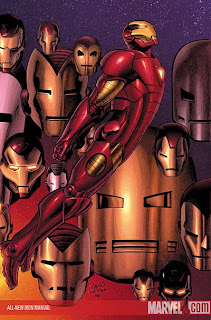
It's a good thing that this is not a "best of" list or it would be arrogant of me to breathe a word about the All-New Iron Manual. Although this was not a perfect project it was one of the most exciting books I have written because of the amount of new artwork involved. I'm always pleased to give Eliot R. Brown's work a home, but to have a gallery of Iron Man armors by Carlo Pagulayan and a set of characters drawn by my teenage favorite Ron Lim made this particularly special for me. BPRD: The Ectoplasmic Man

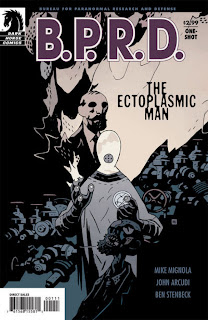
I have tried repeatedly to get into the comic book incarnations of Hellboy & the BPRD, but to be honest, it takes a lot of effort; I don't think I'm the proper audience because I lack Mike Mignola's passion for reworking myths, fables and Lovecraft. Consequently, BPRD: The Ectoplasmic Man was a very pleasant surprise and is easily my favorite comic of the Hellboy mythos I have read. This done-in-one story relates the origin of the BPRD's Johann Krauss and it's the final panel which made me love it. The newly-deceased Krauss confronts a creature who feasts upon the dead; although Krauss' spirit is strong enough to avoid destruction, he can't actually stop the monster. Finally, Krauss receives a containment suit for his ectoplasmic remains and the final panel depicts him returning to the monster's lair. We don't get to see how the rematch plays out, it's left entirely to the imagination. I love a comic that lets me fill in a few of the blanks. Comic Book Comics

Enjoying Action Philosophers as I did, Comic Book Comics was a must-buy. What fascinates me about this series is that I considered myself rather well-educated in comic book history and yet Van Lente keeps drawing out anecdotes I had never heard while tying the fractured pieces of comics history into an easy-to-follow whole. Dr. 13: Architecture and Mortality

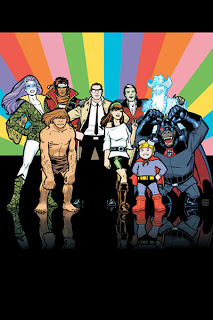
Dr. 13: Architecture & Mortality played around with a number of funky DC characters like Anthro the caveboy, the Haunted Tank and Captain Fear the ghost pirate. Irreverant takes on old properties are rather commonplace at Marvel & DC, but this one goes so far as to mock the creative direction of DC Comics, which tickled me. It turns out to be something of a celebration of the weird and the less-than-perfect while it condemns comics that exist to "fix" other comics. Immortal Iron Fist

The Immortal Iron Fist sent off its premiere creative team in 2008, bringing to an end a great run of action stories. The series' use of flashback tales and the way it built upon old stories while expanding Iron Fist's universe has done so much to make Iron Fist stand out at the head of his own mythos, rather than stapling him in with the rest of Marvel's heroes. This should be a textbook case for anyone trying to revive a dormant and neglected property. Invincible

Although I have heard good things online about Invincible for years now, I had never felt compelled to try the series out, even when free samples were offered. It took the recommendation of my friend Olav to lead me into a purchase and it turned out that Invincible is to my tastes (at least, my tastes at present). Writer Robert Kirkman seems to have been raised on many of the same comics I was and I enjoy how the series constantly finds a neat angle on old ideas. Invincible really got me thinking that this is the sort of super-hero comic the aging fanbase should be reading, rather than encouraging today's writers to alter the age-old Marvel/DC titles in the name of nostalgia or sophistication. In a way, I agree with Kirkman's diatribe, insofar as I'm beginning to think that Marvel/DC have led their super-heroes too far from their roots as kid-friendly creations. I would rather see the market send adult readers who want super-heroes to books such as Invincible and preserve the old heroes for future generations of kids; but that ship sailed a long time ago... JLA Presents: Aztek the Ultimate Man

If only I had consulted Olav prior to purchasing JLA Presents: Aztek the Ultimate Man, I would be a happier man (and $15 richer). I was interested in this series because of the many complimentary things I had heard online so I bought the collection without even cracking the cover. It turns out that Aztek was not to my tastes. I appreciated it's quirky take on super-heroes but it was impossible to place any emotional investment in the characters. All told, it was simply too odd. Its presence on my bookshelf will be a reminder: "never again." Maus

The big comic which I had heard of for years yet never read was Maus. It would have done me some good to find it years earlier, but I'm glad to finally have it done. By sheer coincidence, I was reading this at about the same time as the Diary of Anne Frank; that's a lot of Holocaust. Maus was the perfect compliment because of the contemporary material detailing the latter days of Spiegelman's father. It really informed me of the lasting impact of the Holocaust upon its survivors as I divined that Vladek Spiegelman's mindset was entrenched in the survivalist mentality of the camps and never returned to normal. Nearly Complete Essential Hembeck Archives Omnibus

I had enjoyed Fred Hembeck's work when it ran in locales such as Marvel Age magazine, but I knew little about his earlier material (much less where to find it). The Nearly Complete Essential Hembeck Archives Omnibus solved that for me rather nicely. Although this phonebook-sized tome appeared to be a heavy read, I was confident that I could get through it in a couple of days - didn't I do the same with the various Marvel Essentials of similar size? Well, the Hembeck Archives took weeks. Many pages are crowded with text (which Hembeck apologizes for) as he goes on about comics he loved in his childhood, teenhood and at the time of original publication. I knew it would be funny, but it was also informative. Where else was I going to hear about that great Superman April Fool's story? North World

I had been following the webcomic version of North World since meeting Lars Brown in '06 and I was pleased to be there for the arrival of the print version. North World was the first webcomic I've followed which tells a story (as opposed to say, telling gags) and it opened up my eyes to the possibilities webcomics offer in a way 200 pages worth of Scott McCloud didn't. The "infinite" length and importance of page breaks really come through in the day-to-day process of webcomics.

Rex Libris

It seems that this will be the last year to talk about Rex Libris, which ended its run with issue #13. This was one of the first independent comics that I really enjoyed, in no small part because of the librarian hero concept. Rex had a fine send-off for his last year, even if I still don't care about Lovecraft pastiche (see BPRD). I'll really miss the Barry's editorials with their send-ups of comic book publishing; Barry's catastrophic business decisions which supposedly caused the comic to go out of publication seemed prescient in light of the collapse of Virgin Comics around the same time. Shockrockets

When I placed a copy of Shockrockets down at the cash register, the clerk broke out into a grin. He had a lot of fondness for this book and I can see why. Although it was brought to a quick finish, it tells a fairly complete story about a young man who is recruited into a band of pilots who operate extraterrestrial aircrafts. Kurt Busiek was on his a-game here and Stuart Immonen turned out some fine art; Shockrockets is the best combination I've seen of Busiek's character-driven material alongside all-out-action. Best action hero comic I've read since Global Frequency. Skaar: Son of Hulk

Skaar: Son of Hulk has not been everything I wanted so far. As a sequel to the storyline "Planet Hulk" I've found it a bit disappointing, but there is one aspect which has impressed me - the art. I have never been a fan of Ron Garney's work but somehow his material in Skaar is really clicking for me. Perhaps it's the absence of his inker, perhaps it's the barbarian-style environs, but I've been seeing a Joe Kubert-esque quality to his work that I really, really enjoy. Likewise, Butch Guice has been turning in astounding work in the back-up stories. He has a real John Buscema flair that I hadn't noticed before (again, perhaps because of the subject matter) and there aren't many contemporary artists following in the footsteps of the Foster/Buscema types. Guice would be an amazing Conan artist.